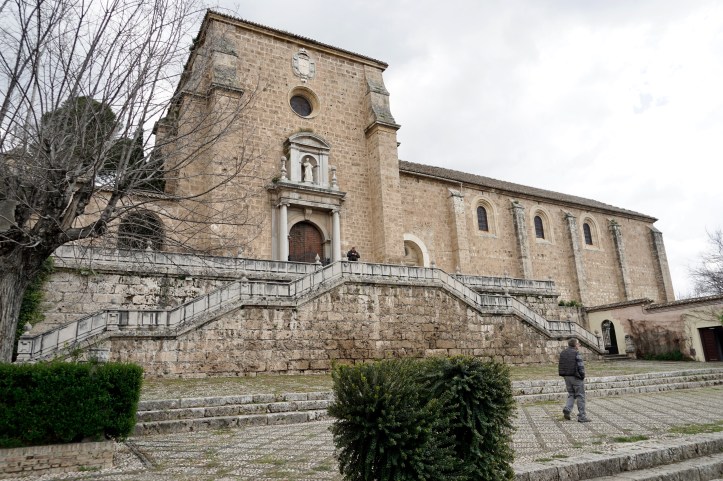
Built between the 16th and 18th centuries, the monastery offers counterpoints of restraint and unbelievable Baroque opulence. The modest exterior belies the visual riches inside.
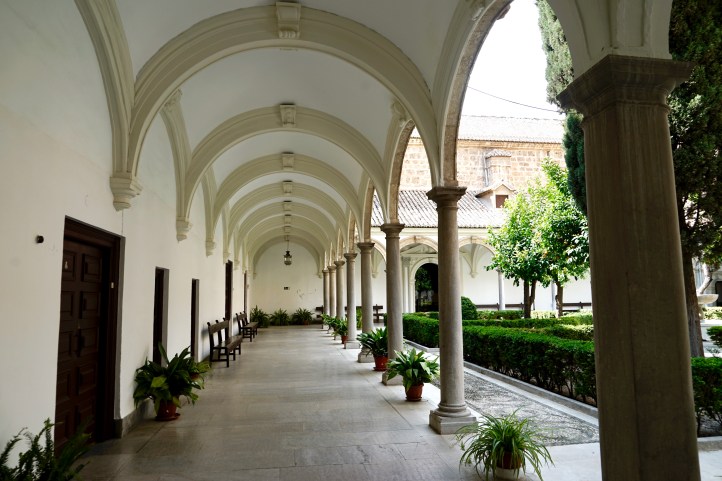
The interior courtyard is a tranquil space. Carthusian monks (Order of St. Bruno) live their life in seclusion, residing in individual chambers. Each monk at one time had his own private garden space to tend. I do not know if there are any monks active in this place today.
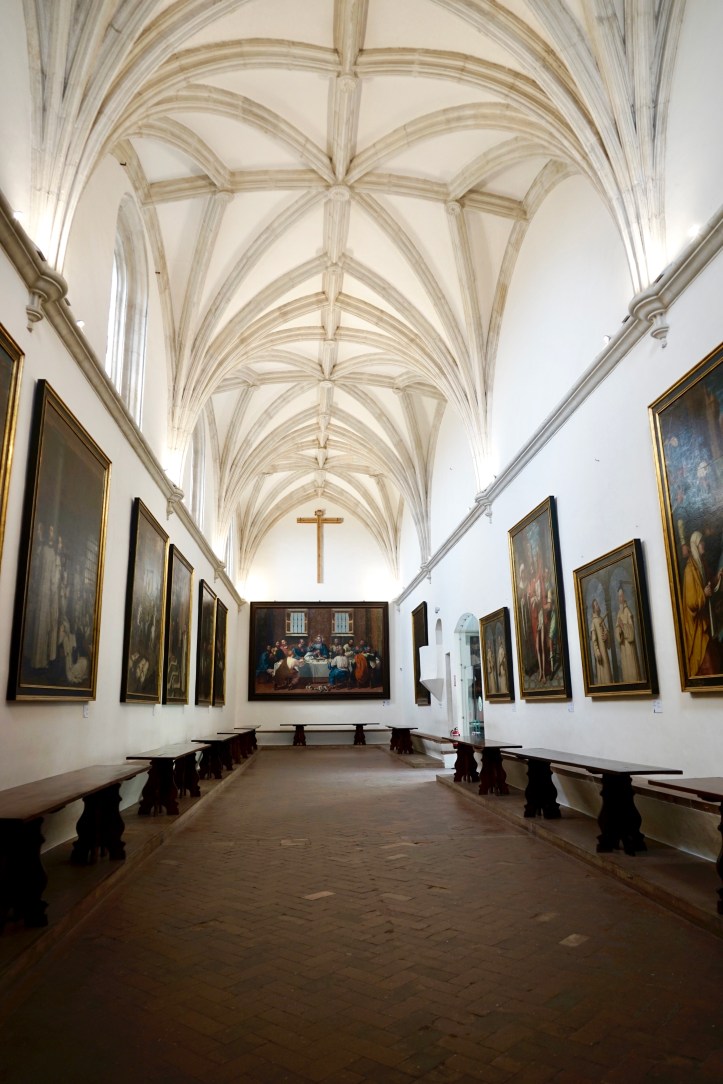
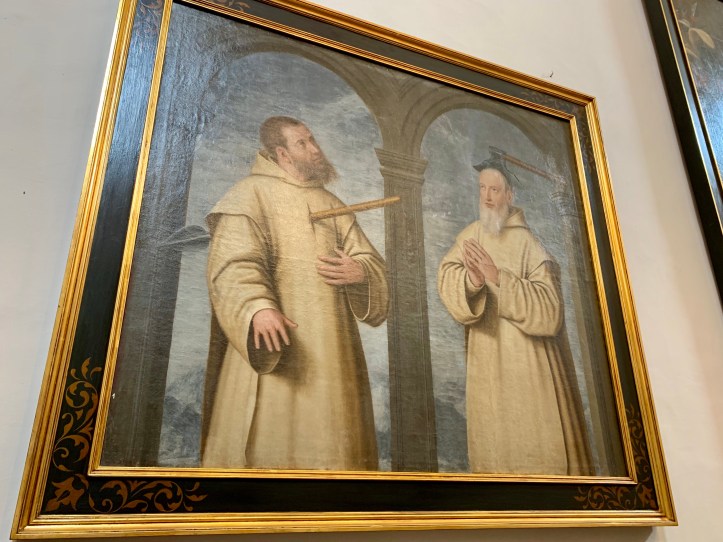
Utilitarian chambers, such as the refectory (dining hall) are beautiful, yet restrained, in their design. The walls of the refectory are covered with paintings showing the history of the order, including grisly scenes of martrydom.
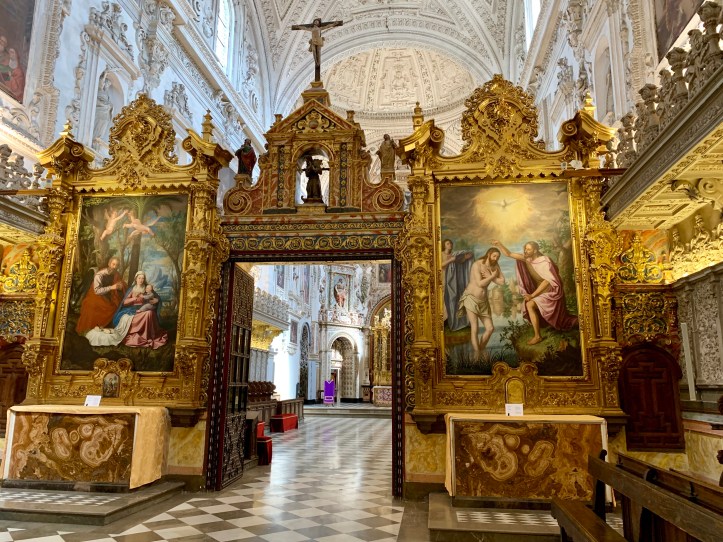
The church itself is stunning in its Spanish Baroque design. One’s eyes can barely take so much beauty in during just one visit.

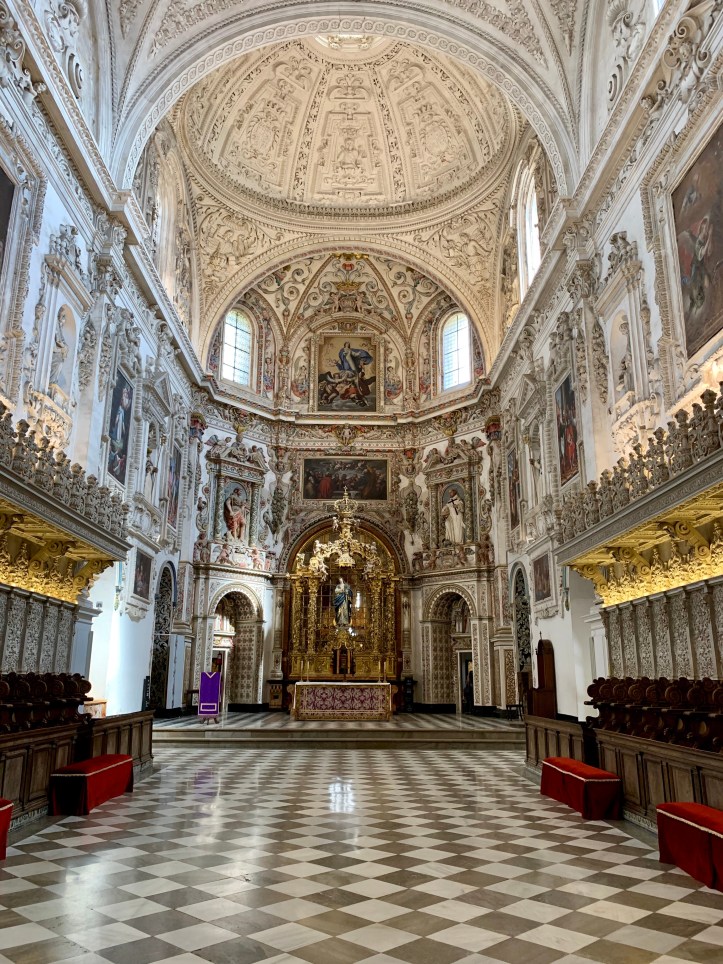
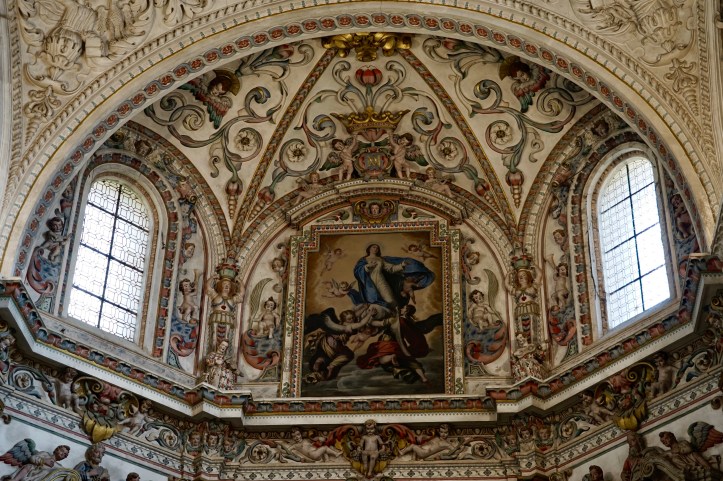
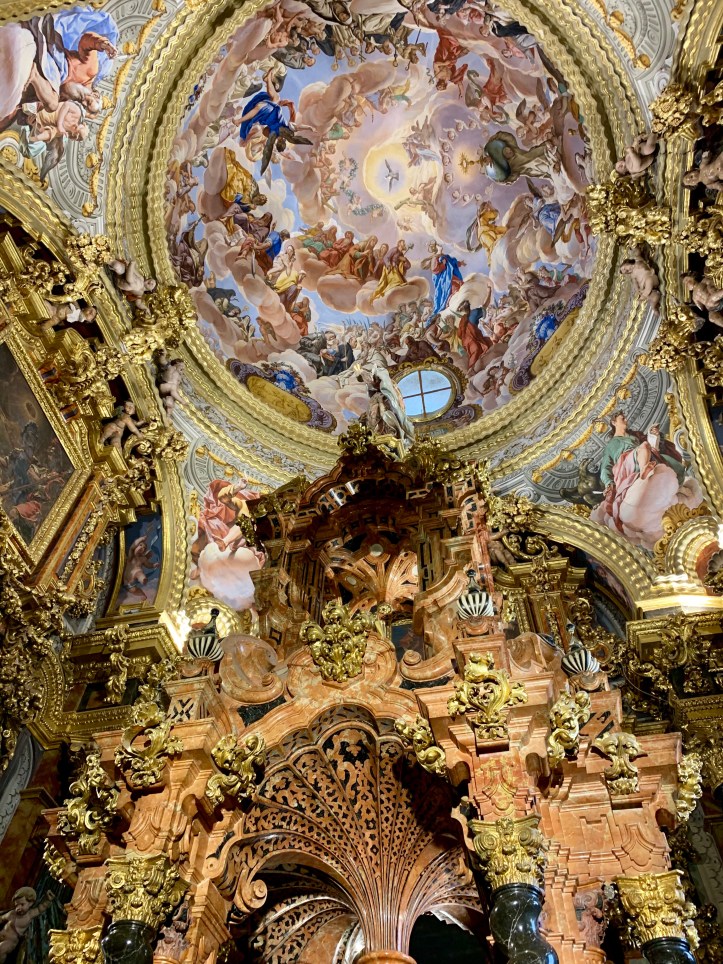
Here is a closeup of the area above the altar seen in the previous photo.
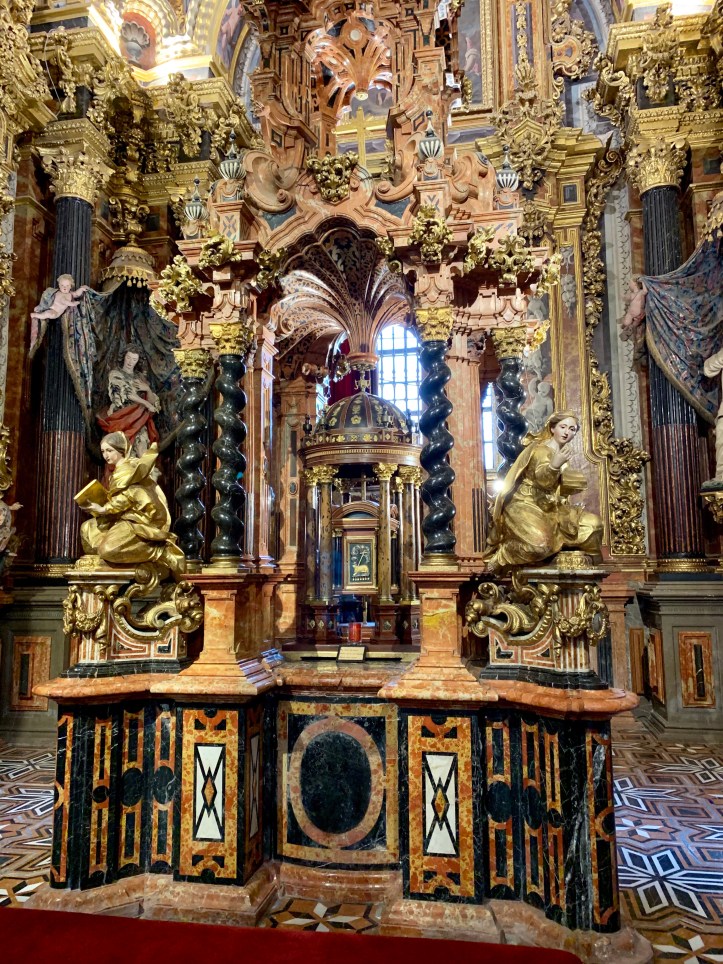
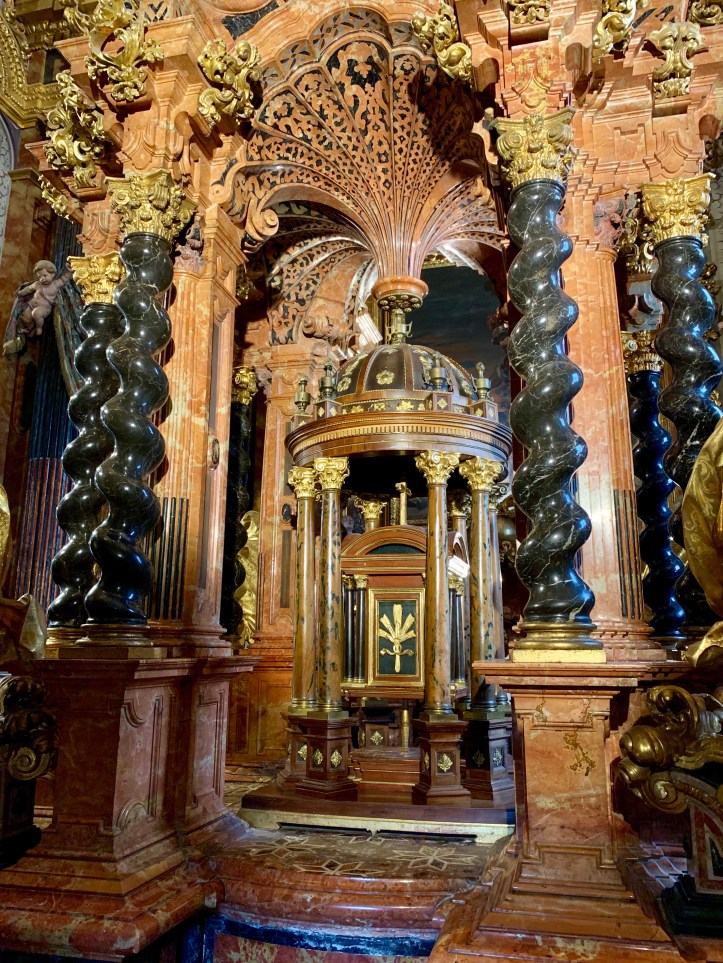
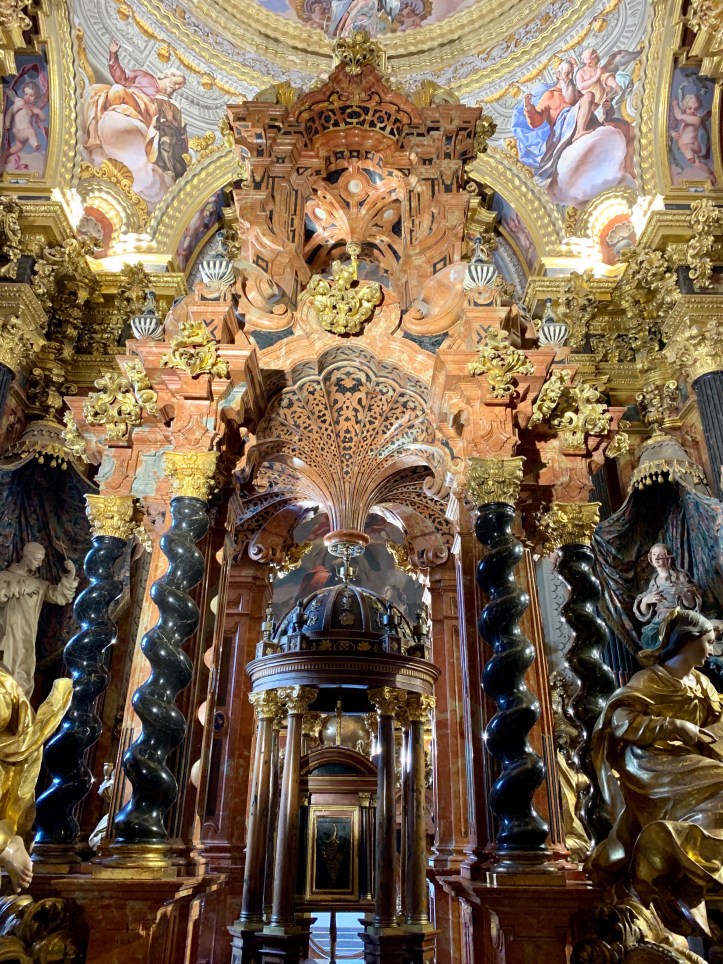
The tabernacle behind the altar is stunning! It is a small space that is difficult to capture in just one photo.
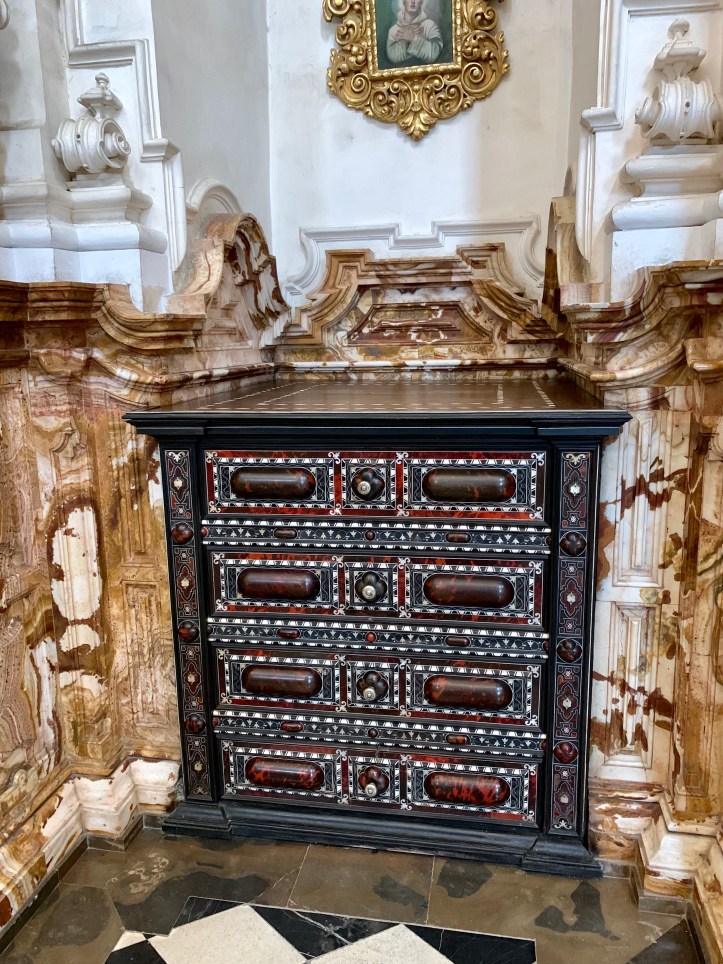
The sacristy is breathtaking. The function of such a place is to store items, including garments (vestments) needed for mass. Notice the beautiful, inlaid wooden storage cases.
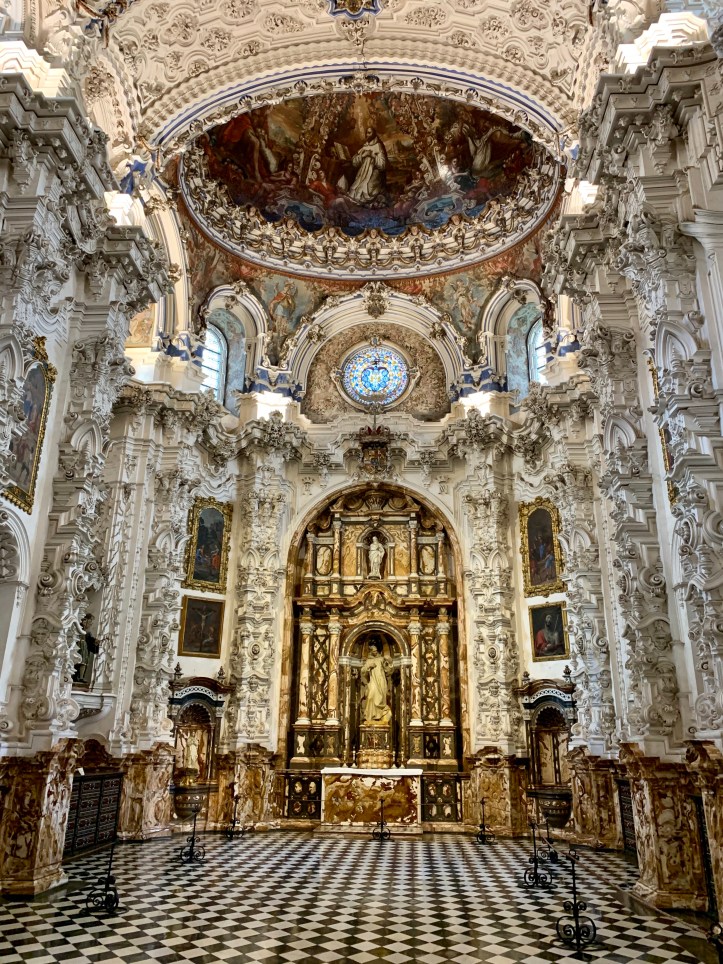
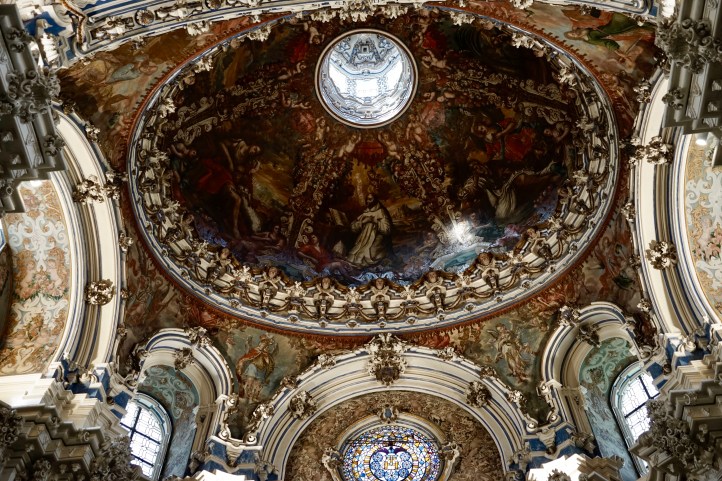
Here is a close up of the sacristy ceiling.
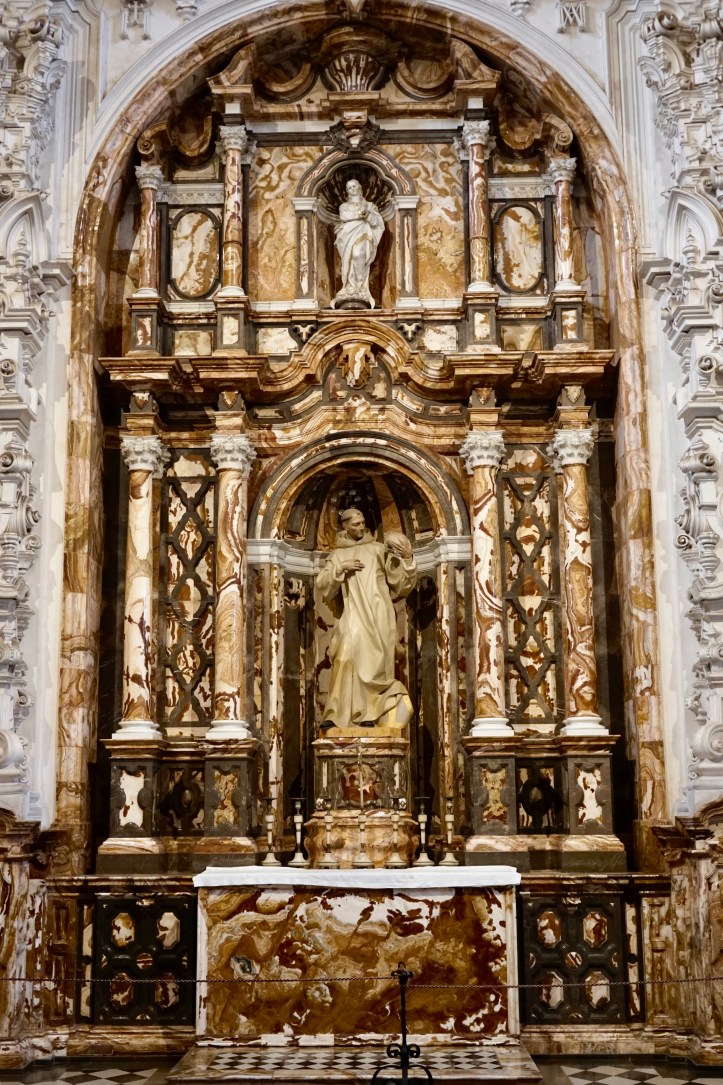
Here is a closeup of the sacristy altar.
Here is one of many wooden storage cases.
We walked from downtown to the Monastery and we also walked back. It was about two miles each way. A bus or taxi would have worked as well.
 Travels with Chris